
How Rent Payments Can Improve Your Credit Profile in India | RentenPe
How Rent Payments Can Improve Your Credit Profile in IndiaEvery month starts the same way. Salary comes in, an...
March 27, 2026 • RentenPe





Smart Budgeting Tips for Tenants Living in Metro Cities
In the middle of the month, it feels like money runs out before the end of the month even in metros like Mumbai and Delhi. Expenses like accommodation, transportation, food, but even everyday purchases add up fast - and tend to deplete our wallets shortly after we receive our salaries.
It is tough for many to cover their rent and other expenditures, as prices continue to rise within every few months. This is why it has become critical to give tips for budgeting to tenants living in metro cities. Let us discuss how one can improve their budgeting skills in this blog post.
Understanding the Cost of Living in Metro Cities in India
The cost of living in metros in India is not quite what one might expect initially. Initially, a decent salary may start seeming low enough when you account for the amount that needs to be paid towards all the expenses for that month.
Most people end up paying a hefty sum toward the payment of the rent. If an individual makes Rs. Rs.40,000 per month, Rs. 12,000 to 20,000 goes toward paying the rent itself. Besides this, there are expenditures such as food, transport, electricity bills, mobile recharge bills, grocery bills, and so forth.
In addition to the aforementioned costs, most people end up making a lot of expenses, which might not seem significant at that point of time but become costly when added to the monthly expenditure.
How to Plan a Monthly Budget as a Tenant
For budgeting on a monthly basis as a renter, it would be beneficial to divide one's salary from the beginning of the month in order to be aware of the expenditure level and savings that should be done.
The share of income can be divided by a ratio known as 50-30-20. For example, if one earns approximately ₹50,000, then 50% can be used to pay off necessary expenses, including accommodation, utilities, food, transportation, and others. Apart from that, 30% can go for some additional things such as eating out, shopping, etc. Finally, about 20% can be kept in case one will need more cash in the future.
Additionally, the division of expenditures into fixed and variable would work well. For instance, the rent, internet costs, EMIs, and electricity bills usually do not change much; however, spending money on ordering food, cab rides, visiting the movie theater, and online shopping can grow drastically.
How to Save Money on Rent in Metro Cities
In metro cities, there is a quest for methods that will help save on rent, as saving even a small percentage of rent means you have saved quite a sum of money by the end of the year.
Location plays an important role. Flats near office areas, metro stations, malls, or busy roads usually cost more. A place that is a little away from these areas can often have lower rent for almost the same type of house.
Flat sharing and co-living are also common ways to spend less on rent. If one flat costs ₹18,000, sharing it with two or three people can reduce the amount a lot. Electricity bills, internet, and other costs can also be shared.
Many owners are open to rent discussion if the house has been empty for some time or if the tenant wants to stay longer. In some cases, even asking can help lower the rent a little.
Managing Rent Payments Without Stress
Many people face problems at the end of the month when rent and other expenses come together at the same time. These rent and expense management tips can help make rent payments easier to handle without last-minute pressure.
It helps to keep rent money separate as soon as the salary comes in. Some people move the rent amount into another account or keep it aside in the first week itself so it does not get spent on shopping, food delivery, or other things.
Digital payment options also make rent payments easier now. UPI works well for direct and quick payments when there is enough money in the account. Credit cards are usually used when someone needs a few extra days before paying the amount back, but they should be used carefully so the next month does not become more difficult.
Building an Emergency Fund as a Tenant
Financial planning for renters should not stop at rent, bills, and monthly spending. Keeping some money aside for bad days is also important because problems do not come with a warning.
For example, if the salary gets delayed by 10 days, the rent date will still stay the same. Food, travel, electricity bills, and internet recharges will also still be there. In that time, even a small amount saved earlier can help avoid stress.
A good target can be 2 to 3 months of basic expenses. It does not have to start with a big amount. Even saving ₹100 or ₹200 here and there, then keeping ₹2,000 to ₹3,000 every month aside, can slowly build a useful emergency fund.
Budgeting Tips for Working Professionals in Metro Cities
The budgeting tricks for professional working individuals living in rental apartments are significant in the scenario where there is an increase in salaries, but simultaneously, expenses are rising. An increase in salary does not necessarily equate to increased savings since other costs such as rent, online grocery orders, online entertainment subscriptions, transportation, and travel expenses are increasing proportionately.
A trick would be to distribute the income across various sources. In this case, some may pay for rent and utility bills, some can save the surplus, and others are used for daily expenses and personal needs. It will ensure that individuals refrain from using the rent fund for grocery expenses and save money for frivolous expenditures.
Furthermore, most working professionals incur unnecessary costs by subscribing to fitness clubs, online entertainment platforms, buying expensive coffee, ordering food, and using ride-hailing apps. Therefore, assessing the expenditure in the above areas monthly will help individuals save more than anticipated.
Another tip to maximize savings is to incrementally allocate funds to the bank account every time an individual receives a salary increase. For instance, if an individual earns an increment of Rs. 5,000, then at least Rs. 2,000 should be allocated towards savings.
City-Specific Budgeting Tips (Mumbai, Bangalore, Delhi)
Rent differs from one city to another. There are some cities where rent takes away a larger share of the income; there are others where daily commuting and expenditure on food items consume higher shares.
Mumbai
While housing accounts for a major portion of expenses among all Mumbai citizens, certain citizens choose to live in areas further away from the center, such as Panvel, Virar, Dombivli, Kalyan, or Navi Mumbai, as these are comparatively cheaper locations to live in. The decision involves trading the lower cost of staying for the higher cost of transportation, but considering the cost savings on train passes each month, train travel becomes a better option compared to cabs.
Bangalore
There are certain areas in Bangalore such as Whitefield, Koramangala, Indiranagar, and HSR Layout where rent is expensive. However, most people prefer to move to other parts of Bangalore such as KR Puram, BTM, or Electronic City because rent is cheaper there. Commuting can be done via company buses and shared bikes.
Delhi
Housing tends to be less of an issue in Delhi, with a number of housing options in various price segments. Many citizens tend to choose houses closer to metro stations since commuting through metro trains tends to be far cheaper than daily commuting using cabs.
FAQs
1. How can tenants save money in metro cities?
Saving money as a tenant could be done through moving into an affordable locality, sharing the rent with friends or roommates, using public transportation, and avoiding food orders.
2. What is the ideal rent-to-salary ratio?
According to experts, an average ratio of rent to salary is usually recommended to remain between 30 and 40 percent.
3. How to manage rent and expenses effectively?
It helps to keep rent money separate at the start of the month and divide the rest into bills, groceries, travel, and savings. This makes spending easier to control.
4. Is sharing accommodation a good way to save money?
Sharing an apartment helps lower rent, utility bills, the cost of the internet, and many other expenses. It is the most effective method of cutting down on spending.
5. How to plan a monthly budget as a tenant?
Budgeting monthly expenses as a tenant involves dividing salary into rent, utilities, grocery expenditures, trips, savings, and personal needs.
Conclusion
Budgeting doesn't necessarily require an individual to stop spending or turn down everything. Budgeting means being aware of where your money is going before you spend it without realizing it.
Some small steps that one could take include planning for rent early, reducing unnecessary costs, saving a little amount of money regularly, and selecting the right place to live. This could make a great difference in metropolitan cities where saving a couple of thousands each month goes a long way.
There are some digital platforms available that could also be helpful, such as RentenPe. RentenPe helps tenants manage their monthly rentals and saves them from the trouble of paying late because of last-minute chaos.
How Rent Payments Can Improve Your Credit Profile in IndiaEvery month starts the same way. Salary comes in, an...
March 27, 2026 • RentenPe

UPI vs. Credit Card: Best Way for Tenants to Pay Rent Before getting into which one is better, it helps&n...
March 20, 2026 • RentenPe

Introduction Paying rent used to happen in a very different way. Many tenants would give cash or ...
March 18, 2026 • RentenPe

When a property becomes vacant, most landlords want to fill it quickly. Calls start coming in, people visit th...
March 12, 2026 • RentenPe

What Is Rental Yield in Real Estate? Meaning, Calculation & ImportanceMost people treat rent like a routine bil...
March 6, 2026 • RentenPe

Paying rent with a credit card once felt like a backup option people used only in emergencies. Now it’s a...
February 27, 2026 • RentenPe
For most tenants, rent is the biggest fixed expense every month. But handling the payment itself hasn’t always ...
February 20, 2026 • RentenPe

How Exactly Does a Credit Card Work?A credit card is a payment tool that lets you spend money that you&nb...
February 18, 2026 • RentenPe

The rent date somehow always seems to come when things are tight. Just as you get comfortable, the date a...
January 20, 2026 • RentenPe

Unlock the power of gamification with RentenPe – India’s First Rent Credit Score! Discover how smart rent payments,...
December 5, 2025 • RentenPe

Make Your Parents Proud: How Smart Rent Payments Secure Your FutureWant to make your parents proud? Pay rent t...
December 2, 2025 • RentenPe

For tenants across India, paying rent with a credit card has always been a smart choice — whether for man...
November 18, 2025 • RentenPe

For tenants across India, paying rent with a credit card has always been a smart choice — whether for man...
November 25, 2025 • RentenPe

Paying rent every month can seem like money going down a drain, with no returns. For many tenants, it is&...
November 21, 2025 • RentenPe
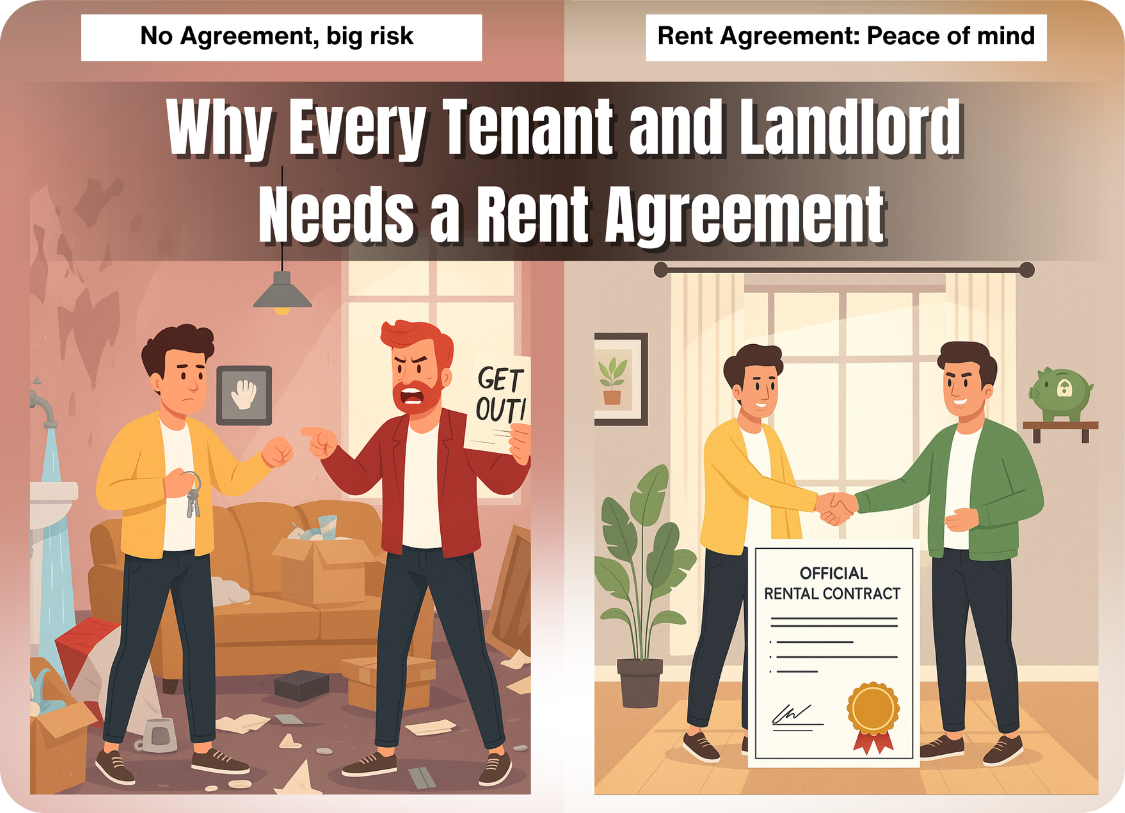
Renting a home based on a handshake is a huge risk. It sounds so straightforward and easy, until something&nbs...
November 14, 2025 • RentenPe

Your Rent Is More Valuable Than You Think Every month, millions of Indians pay rent — money that leaves t...
November 13, 2025 • RentenPe

Every month, millions of Indians pay rent — money that leaves their account with no visible return. But what&n...
October 30, 2025 • RentenPe
Imagine you’re a young professional who has just moved to a new city for the first time for a job. A...
October 27, 2025 • RentenPe

In today’s fast-paced India, where a significant portion of the population is under 40, many individuals migrate fr...
October 27, 2025 • RentenPe

Paying rent online in India has never been easier. With RentenPe, you can pay rent via credit card, UPI, ...
October 20, 2025 • RentenPe

India has always been a land of firsts — breaking barriers and setting global benchmarks in innovation. From s...
October 20, 2025 • RentenPe

In 2025, India’s investment landscape is evolving rapidly, with innovative startups reshaping industries and unlocking new&nb...
October 14, 2025 • RentenPe