How Digital Rent Agreements Can Help Prevent Rental Disputes
In April 2026, a rental dispute in Bengaluru made headlines when a Singapore national nearly lost a ₹6 lakh&nb...
May 22, 2026 • RentenPe




In April 2026, a viral social media post sparked outrage when a tenant in Karthik Nagar received a 15% rent hike notice on a 2BHK already priced at ₹35,000. This isn't an isolated incident; from landlord interviews to aggressive bidding wars in Indiranagar, these stories are the new standard for the Bangalore rental market 2026.
With prime areas facing a 14% surge the fastest rental growth in the Asia-Pacific region residents are at a crossroads. Is it time to stop fueling a landlord's asset and start building your own? This blog dissects the Bangalore rent vs EMI debate with fresh 2026 data to help you decide if you should keep renting or finally commit to a home loan.
1. The Supply Gap: Why Your Rent is Outpacing Your Paycheck
The cost of living in Bangalore is increasing because housing supply can’t match the influx of global tech talent. Originally, a 5% hike was standard, but rising rent in Bangalore has hit 10–15% in 2026. This means your rent could double in 5 years, complicating financial planning for tenants.
Simultaneously, developers are prioritizing luxury 3BHKs, causing a shrinking supply of smaller units. This scarcity has spiked the monthly rent in Bangalore for a mid-range 2BHK to ₹45,000 in hubs like Whitefield.
Comparing the Costs: Rent vs Home Loan EMI
When evaluating rent vs home loan EMI, the immediate monthly outflow is often the biggest task. However, long-term math tells a different story.
| Metric (2026 Data) | Renting (Indiranagar/HSR) | Buying (EMI - ₹1.2 Cr Flat) |
| Monthly Payment | ₹45,000 - ₹60,000 (2BHK) | ₹82,000 - ₹95,000 |
| Interest Rate | N/A | 7.1% - 7.8% |
| Annual Increase | 10% (Compounding) | 0% (Fixed EMI) |
| Tax Benefit | HRA Exemption | Sec 24(b) & 80C Benefits |
The Breakeven Point
An EMI freezes your housing cost, while rent is a moving target. With 10% annual hikes, the tenant’s savings vanish by year six. Beyond that, the homeowner enjoys a fixed discount and growing equity, while the tenant pays a market premium for an asset they’ll never own.
3. Real Estate Trends Bangalore: Where to Invest?
If you are considering renting vs buying a home in Bangalore, location determines your Rental Yield.
4. Financial Planning for Tenants in 2026
If buying isn't an option yet, you must optimize your cash flow. The high-intent move in 2026 is using a rent payment app Bangalore to manage these ballooning costs.
5. The Verdict: What Makes More Sense?
In 2026, the renting vs owning a home decision comes down to your Stay Duration.
Conclusion
In 2026, the real danger isn't the commitment of an EMI, but the compounding cost of a rental market that no longer has a ceiling. While renting offers flexibility, the lack of a rent cap in India makes tenants vulnerable to market whims.
For most professionals, locking in a fixed EMI in a growing corridor like North Bangalore or Whitefield is the smarter financial move for the decade ahead. Use a home loan EMI calculator India to check your specific eligibility before making the jump.
FAQ
1: Is it better to buy or rent in Bangalore in 2026?
Buying is better for stays over 6 years as fixed EMIs beat 15% annual rent hikes, building equity while rents offer zero long-term returns.
2: What is the average rental yield in Bangalore right now?
Bangalore leads India with yields of 3.5–5%. Electronic City offers the highest yield (5%), while Whitefield provides a balance of yield and growth.
3: Can paying rent digitally help me get a home loan later?
Yes. Using rent payment apps in 2026 reports on-time payments to CIBIL, improving your credit score and helping secure lower interest rates on loans.
4: Which areas show the highest property appreciation in 2026?
North Bangalore (Airport Road) and Sarjapur Road lead with 10–12% annual growth, driven by metro expansion and new Global Capability Centres (GCCs).
In April 2026, a rental dispute in Bengaluru made headlines when a Singapore national nearly lost a ₹6 lakh&nb...
May 22, 2026 • RentenPe
The urban Indian tenant enjoyed a clever financial loophole: using credit cards to pay monthly rent. It was th...
May 15, 2026 • RentenPe
The era of monthly rent anxiety and frantic bank visits is over. However, a new challenge emerged in early&nbs...
May 7, 2026 • RentenPe
In 2025, India’s digital payment system accomplished an impressive milestone: the Unified Payments Interface (UPI) processed&...
April 30, 2026 • RentenPe

The way we live & work in India is changing rapidly, & it is evident in our urban rental market.&...
April 24, 2026 • RentenPe

In the middle of the month, it feels like money runs out before the end of the month even in metros&...
April 7, 2026 • RentenPe

Every month starts the same way. Salary comes in, and almost immediately, a big part of it goes out as&nb...
March 27, 2026 • RentenPe
UPI vs. Credit Card: Best Way for Tenants to Pay Rent Before getting into which one is better, it helps&n...
March 20, 2026 • RentenPe

IntroductionPaying rent used to happen in a very different way. Many tenants would give cash or hand over a&nb...
March 18, 2026 • RentenPe

When a property becomes vacant, most landlords want to fill it quickly. Calls start coming in, people visit th...
March 12, 2026 • RentenPe

Most people treat rent like a routine bill. Something that leaves your account every month without much thought.&nb...
March 6, 2026 • RentenPe

Paying rent with a credit card once felt like a backup option people used only in emergencies. Now it’s a...
February 27, 2026 • RentenPe
For most tenants, rent is the biggest fixed expense every month. But handling the payment itself hasn’t always ...
February 20, 2026 • RentenPe

How Exactly Does a Credit Card Work?A credit card is a payment tool that lets you spend money that you&nb...
February 18, 2026 • RentenPe

The rent date somehow always seems to come when things are tight. Just as you get comfortable, the date a...
January 20, 2026 • RentenPe

Unlock the power of gamification with RentenPe – India’s First Rent Credit Score! Discover how smart rent payments,...
December 5, 2025 • RentenPe

Want to make your parents proud? Pay rent the smart way with RentenPe! Build your rent credit score, earn ...
December 2, 2025 • RentenPe

For tenants across India, paying rent with a credit card has always been a smart choice — whether for man...
November 18, 2025 • RentenPe

For tenants across India, paying rent with a credit card has always been a smart choice — whether for man...
November 25, 2025 • RentenPe

Paying rent every month can seem like money going down a drain, with no returns. For many tenants, it is&...
November 21, 2025 • RentenPe
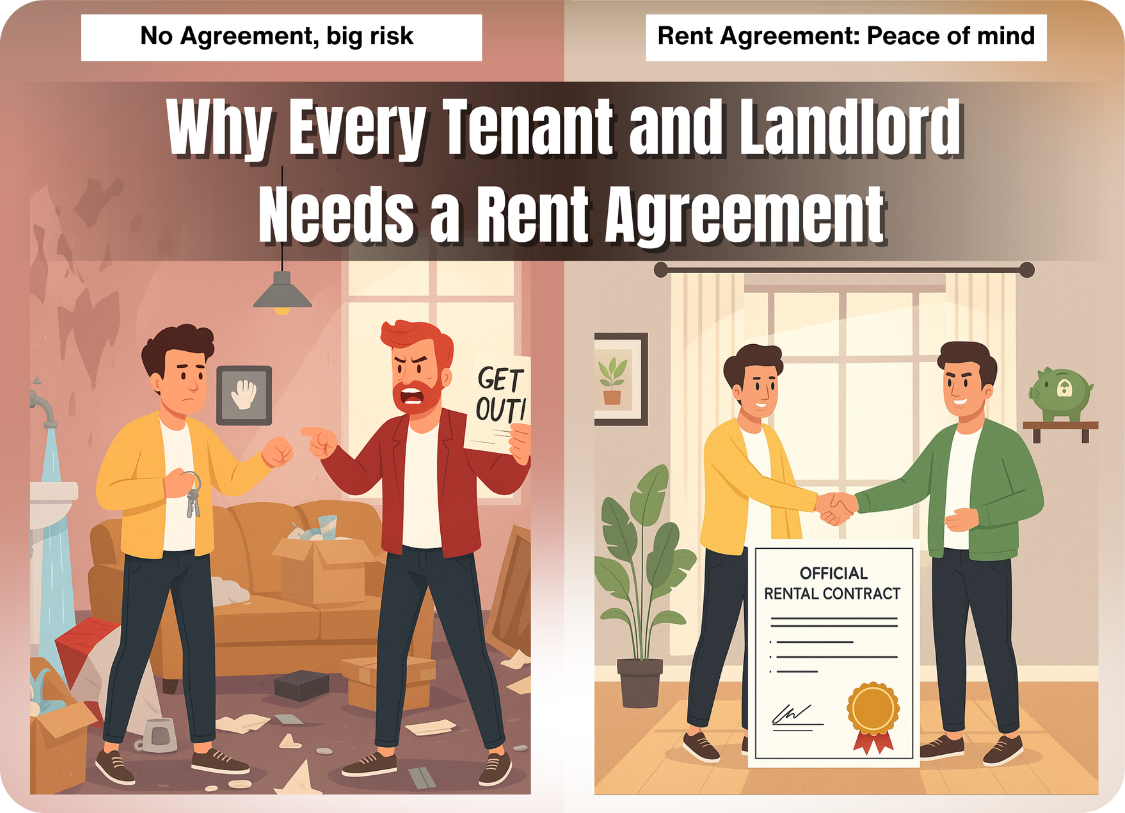
Renting a home based on a handshake is a huge risk. It sounds so straightforward and easy, until something&nbs...
November 14, 2025 • RentenPe
Your Rent Is More Valuable Than You Think Every month, millions of Indians pay rent — money that leaves t...
November 13, 2025 • RentenPe

Every month, millions of Indians pay rent — money that leaves their account with no visible return. But what&n...
October 30, 2025 • RentenPe
Imagine you’re a young professional who has just moved to a new city for the first time for a job. A...
October 27, 2025 • RentenPe

In today’s fast-paced India, where a significant portion of the population is under 40, many individuals migrate fr...
October 27, 2025 • RentenPe

Paying rent online in India has never been easier. With RentenPe, you can pay rent via credit card, UPI, ...
October 20, 2025 • RentenPe

India has always been a land of firsts — breaking barriers and setting global benchmarks in innovation. From s...
October 20, 2025 • RentenPe

In 2025, India’s investment landscape is evolving rapidly, with innovative startups reshaping industries and unlocking new&nb...
October 14, 2025 • RentenPe